THROUGH THE VISION OF TZILI SCHNEIDER, HOSTAGES’ FAMILIES AND JEWS FROM EVERY BACKGROUND EMBRACED SHABBOS, BROUGHT A SEFER TORAH TO LIFE, AND WITNESSED THE RETURN OF THE MISSING WITH RENEWED FAITH
By Malkie Schulman
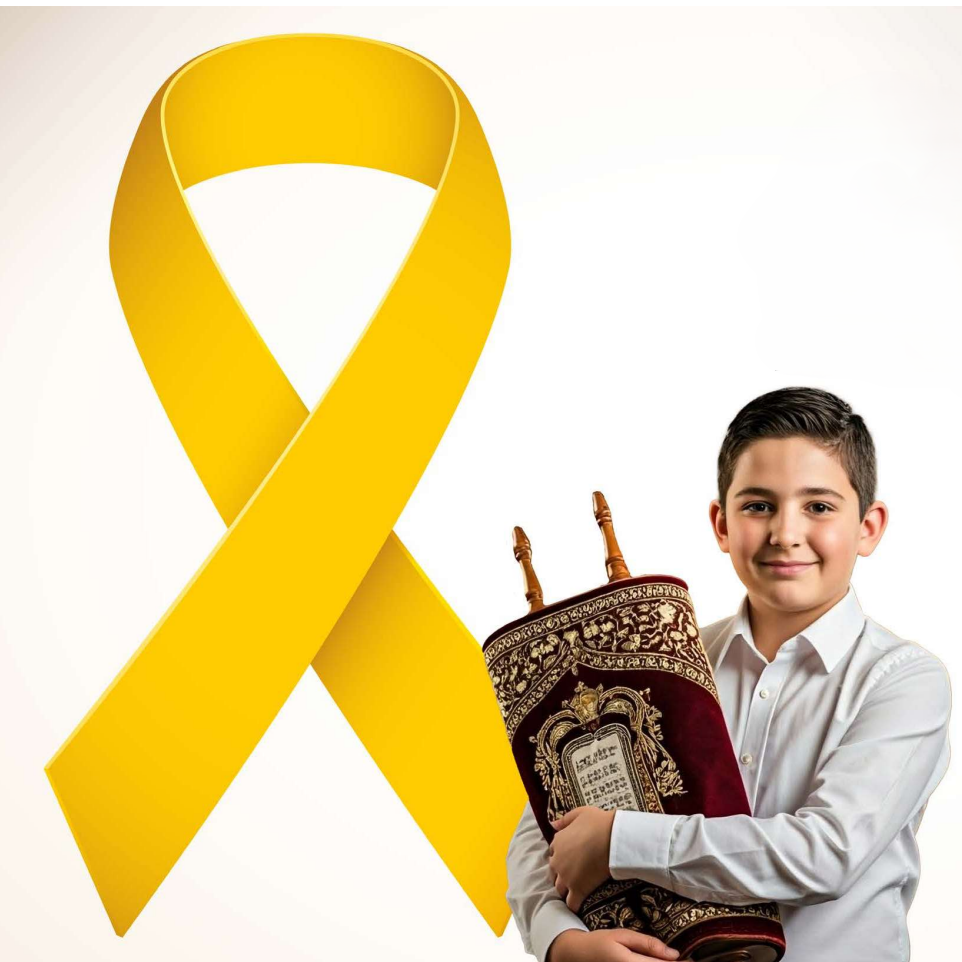
A few weeks ago, on Motzaei Simchas Torah, only two days after the 20 remaining living hostages were freed, an unusual hachnasas sefer Torah took place. This sefer Torah had been commissioned not with money but with commitment. Thirty-seven special individuals known as Giborei HaShabbat had pledged to observe Shabbos in memory of loved ones who were murdered on October 7, 2023, and also as a zechus for the release of those hostages still in captivity. These survivors had made their pledge the previous Motzaei Simchas Torah; now they were gathered to donate the newly completed Torah to a shul in Bnei Brak.
At the heart of this extraordinary moment was a woman whose quiet vision had made it possible- Tzili Schneider, the founder of Kesher Yehudi, an organization devoted to uniting klal Yisrael by pairing observant and nonobservant Jews as chavrusas. For the past two years, she has walked alongside the families of the hostages, offering strength, hope, and guidance rooted in emunah. The story of this sefer Torah couldn’t be told without her, because it was through her efforts—and the efforts of the thousands of people she inspired—that Giborei HaShabbat came into being.
Since the beginning of the war, Tzili had been consumed with supporting the hostages’ families on every level. Along with her staff, she organized a tefillah gathering at Binyanei Hauma that drew over 2,000 women. For many, it was their first encounter with the chareidi world, among them Shelley Shem Tov, the mother of Omer Shem Tov, a hostage who was released last February. She was deeply moved by the experience and has since become shomer Shabbos.
Kesher Yehudi also ran a Selichos event at the Kosel and a major Rosh Chodesh celebration in the Kosel tunnels. But beyond these events, Tzili has accompanied families to hafganot (demonstrations) at the protest encampment outside Prime Minister Netanyahu’s residence in Yerushalayim as well as at other locations. She has also organized Shabbatons and Yom Tov gatherings to strengthen both community and spiritual bonds. Ever-present and with a listening ear, offering comfort in their grief and fear, Tzili’s ultimate goal is to connect these families to Hakadosh Baruch Hu.
She recalls, “Shortly after the horrific events of October 7, I went down to speak to the hostages’ families at the encampment. People tried to persuade me not to go. They warned me that they were very leftist and anti-chareidi and would push me away. But it was such a great tragedy that I felt it was imperative to show them that their pain was our pain as well. When I met them, instead of pushing me away, they welcomed me with open arms. They were genuinely touched that I had come to be with them in their anguish.”
Reflecting on the past two years, Tzili says that she has learned a profound lesson.
“Our not-yet-shomer Shabbos brothers and sisters are just waiting for us to reach out to them. I went wherever I could be supportive. I had no political agenda. People were shouting at Netanyahu to stop the war, but none of that mattered to me. I wanted to bring Hashem into the picture. I asked these people, ‘Do you think that Bibi will listen? Or that President Biden can help?’ They said no. So I told them, ‘Let’s stop the demonstrations and turn to the only One Who can do something—Hakadosh Baruch Hu. Go to the Kotel and speak to Hashem.’
“It was the month of Elul, and I explained that it’s the time of year when Hashem is in the sadeh just waiting for us to approach Him.”
Tzili emphasizes that many frum Jews around the world responded in their own ways, some with more tefilah, others through the recitation of Tehillim, and still others by taking on kabbalos, all intended as zechusim for the hostages.
“The Tehillim that were recited in shuls around the world with the names of the hostages as a zechus for them. Not to mention the women who lit Shabbos candles early, invited non-frum guests over, or performed the mitzvah of hafrashas challah. I also brought hostages’ family members to gedolim for brachos.”
On two occasions, Tzili flew to Washington and once to New York, accompanying the families when they visited the White House and met with members of Congress. Their aim was to urge both the Israeli and US governments to intensify their efforts to obtain the hostages’ release.
Tzili’s role, however, wasn’t political; it was emotional and spiritual. “I spoke with various officials not as an expert but simply as a frum woman sharing the Torah perspective on pidyon shouyim.
I explained that the hostage situation was a matter of pikuach nefesh, which overrides even Shabbos and Yom Kippur.”
She also spoke to Nizar Zakka, the president of Hostage Aid Worldwide (HAW), a Washington, DC-based organization that supports families of hostages and intervenes with international bodies for their release. He was very supportive when they explained how crucial it was that Hamas not make another selective release, deciding which hostages to free and which to hold back.
“We urged them to make a deal that all of them would be released together. It was excruciating for families whose loved ones weren’t chosen for release.”
When asked if she believes their efforts influenced the final release of all the remaining living hostages, Tzili responds firmly, “Absolutely not. The only One Who made a difference was Hakadosh Baruch Hu. We all had to do our hishtadlus, but He was the One Who arranged the outcome.”
Faith in the Tunnels
Matan Angrest, a hostage who spent 738 days in captivity, was released on October 13, 2025. Soon afterward, Tzili had the opportunity to meet with him.
“I spoke to him right away, before anyone could influence what he might say. He shared some remarkable spiritual commitments that he undertook. The first two were that he davened three times a day and read through each of the Chamishah Chumshei Torah. ‘Every time I finished the last parshah, it felt like a Yom Tov for me,’ he said. ‘I completed the tenth cycle on the day before I was told I’d be released, and now I’m here to celebrate the yearly completion of the reading of the Torah with all of am Yisrael.’”
This was especially striking considering that Matan came from a completely secular background and had no familiarity with either a siddur or a Chumash before he was taken hostage. When Tzili asked how he had obtained these sefarim, he explained that the soldiers carried sefarim with them as a form of shmirah, and his captors gave him some that were left behind. Among them was a sefer called V’sein Chelkeinu, which was written for soldiers. It contained a series of halachos for each day, focusing on a different topic every month.
The volume Matan received was for the month of Teves, which discussed the laws of tefillah. After reading it, he learned that tefillin that are pasul should not be used, which explained why he used the pair that were given to him for only a few weeks. The sefer also outlined the three daily tefillos, Shacharis, Minchah, and Maariv.
Tzili was curious. Matan had seen daylight only twice during his two years in captivity. How had he known when it was morning, noon or night? He explained to her that Muslims pray five times a day, and the sefer said that one is permitted to daven Shacharis 70 minutes after hearing their morning prayer. From this, he could determine the timing for Minchah and Maariv as well.
“Hashem made sure that I received everything I needed,” Matan said simply. His captors even gave him grape juice for Kiddush and Havdalah.
“When he told us that he’d kept Shabbos every week, his parents and I were in shock,” Tzili says. “His mother asked, ‘Matan, how did you even know how to keep Shabbat?”
In truth, it wasn’t all that difficult, he said. There were few opportunities to be mechallel Shabbos in the tunnel; there were no lights to turn on and no telephones. And from V’sein Chelkeinu, he learned how to recite Kiddush and Havdalah.
“And he wasn’t the only hostage who kept Shabbos,” Tzili adds. “There were many others as well.”
“I was in captivity for two years, so I had a lot of time to think,” Matan told her. “I came to understand that everything happening to me was orchestrated from above. Someone was directing my captors to move me from place to place, Someone was deciding who would live and who would die, who would be released and who wouldn’t.”
He stressed that he wasn’t afraid of Hamas because he knew that Hashem was watching over him. They could do nothing to harm him if it wasn’t Hashem’s will. “When you feel Hashem with you,” he said, “you have no fear of Hamas.”
Matan also explained that he kept Shabbos not as a bargaining chip to hasten his release but out of gratitude to Hashem for keeping him alive, making him a Jew and giving him the mitzvah of Shabbos. He described how this realization came to him while he was reading the siddur.
“I read the words ‘Yismach Moshe b’matnat chelko ki eved ne’eman karata lo.’ Moshe was happy with the gift of being Hashem’s servant. I realized that the greatest gift we ever received was the Luchot, which contained the mitzvah of Shabbat, so it was only fitting to express my thanks by keeping it.”
Matan also reflected on the deeper meaning of life. “Most people eat and sleep so they can live. But what are they living for? Simply to eat and sleep? There had to be a higher purpose. For me, that purpose was in the siddur, learning Chumash, keeping Shabbat and seeing the higher meaning in everything.”
Tzili asked if he had ever felt angry or asked, “Why me?” He replied, “No. I didn’t ask why it happened to me. If anything, I asked why I survived. I should have died a thousand times. I had a terrible wound and fell into a coma. I was supposed to die, but I survived because Hashem wanted me to be alive for a reason.”
Segev Kalfon, another recently released hostage, shared a similar experience, describing the relationship he developed with Hashem when he was being starved and abused in the tunnels of Gaza. “I would talk to Hashem not to ask for things but to establish a relationship with Him.” Like Matan, Segev said that all he feels is gratitude to Hashem for sparing his life.
The incredible emunah of these young men, who were raised with no exposure to Yiddishkeit, reminds Tzili exactly why she started Kesher Yehudi—to help every Jew, regardless of his or her background, reconnect to Hashem and to each other.
From Vision to Action
“My mother taught us that there are only two options as far as Jews were concerned: Jewish and non-Jewish,” Tzili says.
Growing up in Meah Shearim in a close-knit family of Slonimer chasidim, Tzili absorbed this cardinal rule of having genuine ahavas Yisrael for every Yid.
“The Jewish people have been a nation for thousands of years, spread around the globe, speaking different languages and eating different foods, but always knowing that a Jew is a Jew. We are all the sons and daughters of those who stood at Har Sinai, the descendants of our holy Avos and Imahos and partners in our shared history.”
Tzili realized that solutions would never come about through the media, the government, the army or the Israeli Supreme Court.
“We needed a grassroots organization made up of regular people— people willing and able to sit down together and talk face to face with respect.”
When Kesher Yehudi first started nearly 14 years ago, Tzili hoped to launch perhaps 50 chavrusas. But by the end of the first year, there were already a thousand learning partners. Today Kesher Yehudi has 36,000 people participating in its chavrusa programs. But Tzili’s ambitions have only grown.
“The chareidi community is quite large,” she maintains. “If 200,000 chareidim learned with 200,000 chilonim, the face of the entire country would change.”
The catalyst that set Kesher Yehudi in motion occurred on one of Tzili’s daily bus rides from Ramot to the Jewish Quarter of Yerushalayim, where she taught.
“Every day I saw the same chiloni woman on the bus going to her job. We got off at the same stop, but we never spoke. I knew there had to be a way to bridge the gap between us. The solution would never come from fighting, only from friendship and respect. The truth is that we don’t have the luxury of hating each other. Our enemies want to kill us. They couldn’t care less what political party we belong to. Hamas doesn’t care, the Nazis didn’t care, and neither does any of the rest of our many enemies.”
Guidance from a Gadol
Before doing anything, Tzili and her husband went to speak to Rav Yosef Shalom Elyashiv.
“There were a lot of people in line waiting to talk to him,” Tzili recalls. “But Rav Elyashiv believed in our mission and gave us a lot of his time.”
He was enthusiastic about Tzili’s ideas and stressed that this was exactly what klal Yisrael needed most. He patiently answered all of their sheilos, the first of which was what to learn with a chavrusa.
“They should learn about Shabbos,” was his immediate reply.
Tzili recalls her hesitation. “But Rebbi,” I said, ‘Shabbos is the last thing these people should be learning. For them, Shabbos is a day of don’ts. It’s their one day off from work. They go out with their kids, eat schnitzel and spend time on the computer. They’ll go crazy having nothing to do all day. It’s too hard.’
“But Rav Elyashiv insisted. ‘If it’s not too hard for me, it’s not too hard for them. They think it’s hard, but it’s harder not to keep Shabbos. A life without Shabbos is difficult. Shabbos is a gift. In the Torah, there are no distinctions between chiloni and chareidi, but there is such a thing as being mechallel Shabbos b’farhesya. Teaching people about Shabbos is helping them to be Jewish.’
“After receiving this answer, we adhered very strictly to Rav Elyashiv’s advice,” Tzili says. “Keeping Shabbos became the focal point of Kesher Yehudi. I felt it was a sign that we were doing the right thing when one of our first Shabbatons took place b’hashgachah pratis on Rav Elyashiv’s yahrtzeit.”
Kol Mevaser
Tzili then talks about an event that she believes contributed to the hostages’ release on Hoshana Rabbah.
“There’s an amazing couple, Shmuel and Leah Rieder from Monsey, who are very involved in our work. They are committed to helping the survivors, the families of the hostages, and the hostages themselves. With their generous sponsorship, we held two Shabbatons in 2024, one in Av and one in Elul. Around 350 people attended each event and kept Shabbos as a merit for the hostages.”
Last year, with the first yahrtzeit of those who were murdered on October 7 rapidly approaching, almost all of the hostages were still in Gaza. It was a complicated, emotionally charged time. A number of survivors and relatives of those still in captivity came to Tzili and said, “We need Kesher Yehudi to help us. We can’t stay at home and face this Yom Tov alone. It’s just too painful.” How could they dance with the Torah under such circumstances? For many, Simchas Torah had become a day of mourning.
In response, Kesher Yehudi and the Rieders decided to observe the Yom Tov as a group. All in all, about a hundred relatives of the hostages, 200 people from the Nova community and 50 parents who had lost children participated.
Before Yom Tov started, Tzili had an inspiration. “It was Hoshana Rabbah, a very holy day, although many of the participants had never heard of it,” she recalls. “They certainly didn’t know about aravos. Two hours before Yom Tov, a Kesher Yehudi staff member ran to the shuk in Machaneh Yehudah to buy over a thousand aravos, five for each person, so they could perform the minhag of chibut aravos. There was no time to really explain, but everyone participated.
“Our rav instructed everyone to pick up their aravos and repeat the words ‘Kol mevaser mevaser v’omer—the voice of the herald (Eliyahu Hanavi) brings good tidings and proclaims—three times. He then instructed them to beat the aravos on the ground five times, and they all did
It.”
The Birth of Giborei HaShabbat
Among the participants at the Hoshana Rabbah event were Anat and Chagai Angrest, Matan’s parents. Tzili urged them to beat the aravos on the ground. “You have to do it,” she said. “It’s a very holy thing.”
They looked at her like she was crazy. “This looks insane. Do you even understand what you’re doing?” they asked.
“No, not fully,” Tzili admitted. “But I know that Rosh Hashanah can’t fall on a Sunday because that would mean that Hoshana Rabbah falls on Shabbos, in which case we wouldn’t be able to beat the aravos. We’re allowed to observe Rosh Hashanah on Shabbos and forgo the blowing of the shofar, but our chachamim felt that beating the aravos is even more important than that.”
The Angrests then picked up their aravos and performed the ritual. When Yom Tov began, the group lit Yom Tov and Yizkor candles and danced with the Torah.
“We sold hakafos,” Tzili explains, “not for money but for mitzvos. One person pledged to keep five Shabbosos for the hostages. Another pledged ten. People committed to not driving, using phones or smoking on Shabbos, and some made a kabbalah to say Krias Shema before going to bed at night.
There were even a few who committed to keeping Shabbos for the rest of their lives!
“That night we held a memorial for those who were murdered and made a siyum on Sefer Devarim. Everyone sat together and learned. It was a beautiful and sacred Simchas Torah.”
After Yom Tov, a participant named Shira approached Tzili and said, “My brother and my best friend died in front of my eyes at the Nova festival. I want to have a sefer Torah written in their memory.”
Tzili spoke to Shmuel Rieder, who agreed to sponsor it on one condition. “She has to keep Shabbos,” he said. Shira tried to negotiate, offering to keep a few Shabbosos or just the winter ones, which end early, but Rieder insisted that it was all or nothing. Shira finally agreed, saying, “If I don’t keep my end of the bargain, I’ll return the whole 150,000 shekels to Mr. Rieder.”
There were other people at the event who were inspired and wanted to be part of the deal as well. Mr. Rieder said that whoever keeps Shabbos will have the merit of being part of the writing of a new sefer Torah. And that’s how the Shabbos project came about. The individuals who joined were referred to as Giborei Hashabbat, and their group was named Shamor V’Zachor. Shamor for keeping Shabbos, and Zachor for remembering the victims. The Hachnasas sefer Torah for this special Torah was scheduled to take place the following Motzaei Simchas Torah.
“We arranged weekly Zoom classes with Rabbi Yaron Ashkenazi, and the chavrusas taught their partners the halachos of Shabbos. They also invited them into their homes to experience Shabbos. Slowly but surely, all 37 original members of the group became fully shomer Shabbos, and more people began asking to become members.”
This past Teves, Chagai Angrest and Kobi Kalfon, Segev’s father, visited Rav David Abuchatzeira, who instructed them to repeat the words “Kol mevaser mevaser v’omer” three times. “They didn’t understand why he told them to specifically say those words, and neither did I when they asked me. I just told them it was a pasuk that meant there would be good news.” It wasn’t until months later that Tzili realized its significance.
A few weeks ago, she read that Trump wanted a deal promising that all the hostages be returned together. She immediately called Kobi Kalfon and Chagai Angrest and said, “Now I understand what Rav Abuchatzeira meant. He was telling you that your children will return when Kol mevaser mevaser v’omer is said.”
Sure enough, by the first day of Chol Hamoed Sukkos, the hostages’ families sensed that something monumental was about to happen. Chagai ran to Rav Abuchatzeira to thank him. The rav repeated those words three more times and said that all 20 hostages would return alive and together.
And so they did—on Hoshana Rabbah, when Kol mevaser mevaser vomer is said.
“But he didn’t stop there,” Tzili says. “He added that after their return, big miracles would start happening for all of klal Yisrael.
“It was clearly the yad Hashem that had brought us to this moment, and it had nothing to do with Trump or Bibi. There was no rational reason why the hostages had been released when they were. It was all Hakadosh Baruch Hu.
After the captives were released, Rabbi Yitzchak Shapira, a well-connected and big-hearted Yid from Tel Aviv-Zurich who had supported the hostages with letters of chizzuk and meetings with their parents, sponsored tefillin for them along with another generous donor. The tefillin bags were inscribed with the words that had echoed throughout the previous year of waiting: “Kol mevaser mevaser v’omer.”
A Joyous Celebration
On Hoshana Rabbah of this year, Tzili was at home davening. “I didn’t feel that the hostages needed me to be there when they first arrived. It was a time for family.” She did, however, speak to some of their parents later that day.
“The morning after Simchas Torah was when we met the hostages for the first time. The truth is that by the time we met, I felt like I already knew them. Having davened for them for so long and wept with joy when they were released, it felt like we had known each other for years.”
That day, Tzili presented the new tefillin to Matan, Segev, Chagai and Matan’s brother Ophir. “It was Matan and Segev’s first morning out of captivity, the very first time they could put on tefillin; it was a very moving moment,” she says.
“Every Jew in the world felt close to this story. The gratitude and joy were profound. People sang Mizmor L’sodah and Hallel, and all the shuls that had been davening for them for two years joined in. At our family Shabbos table the following week, we sang songs of thanks to the true Matir Assurim.”
The night after their release was Motzaei Simchat Torah, the exact date when Kesher Yehudi had planned to complete the new sefer Torah. “A year earlier, we had said ‘Kol mevaser‘ as a merit for the hostages. Now, exactly 12 months later, Hashem had answered our tefillos!”
Emotions ran high. During the hakafos, more people took it upon themselves to learn Torah every day, celebrate the Yomim Tovim properly and observe Shabbos. One young man who was still grappling with trauma said, “After October 7, I lost all faith in myself. But I want to try taking on keeping Shabbos.”
“So everyone sang the song ‘Ki Eshmerah Shabbat Keil Yishmereini,” Tzili relates.
Watching hundreds of Yidden dancing joyfully around the Torah, Tzili contemplated the words “Ki lo sachpotz b’mos hameis ki im b’shuvo midarko v’chayah.” “Hashem doesn’t want our destruction; He wants our return. And we are returning!”
Many of the Giborei HaShabbat who had committed to keeping Shabbos felt that they had helped to bring the hostages home. “And you know what?” Tzili observes, “I don’t think they’re wrong.”
She compares the hostages’ travails to Krias Yam Suf, a moment of Divine protection in the midst of mortal danger. “It says that a handmaiden saw at the Yam Suf what Yechezkel Hanavi didn’t see in his nevuah,” she says. “These hostages saw the hand of Hakadosh Baruch Hu in the tunnels. Matan Angrest told me he wasn’t even scared when the IDF bombed the building he was in because he knew that Hashem was keeping him safe.”
The work of Kesher Yehudi continues. The Shamor V’zachor group has grown to 55 members, and they will be taking part in the writing of another sefer Torah. They are also planning a major Shabbat Todah for the hostages and their families.
“What happened to the hostages is not just their story; it’s the story of our nation. We are all children of Hakadosh Baruch Hu, and being a child of Hashem in Eretz Yisrael means living a certain way. We have to remember that Shabbos is our most powerful weapon. There’s a trend in Eretz Yisrael these days, especially among young people, who are beginning to keep Shabbos because of the hostages. We’ve already seen so many miracles.”
Nevertheless, even amid the joy, grief remains. Some families are still awaiting the return of their loved ones’ remains. Matan has said that his captivity won’t be over until his friend Itai Chen’s body has been returned.
“Amir and Merav Daniel, the parents of a soldier named Oz, were able to rejoice for others even though their own child had been murdered. Their strength is awe-inspiring,” Tzili says.
“A year ago, when the soldiers went back into Gaza, it was a low point, and morale was low. It felt like the hostages were being forgotten. There was no one to turn to for help, which was, I believe, exactly what Hashem wanted us to understand. When we reach that awareness, we truly realize that ein od milvado, and that’s when He comes through for us.
“Two years ago, thousands of Israelis were dancing at a party on one of the holiest days of the year when they were attacked. This Simchas Torah we danced again, but this time in Yerushalayim, with a new sefer Torah in our arms and light in our souls.”
Loading Viewer...